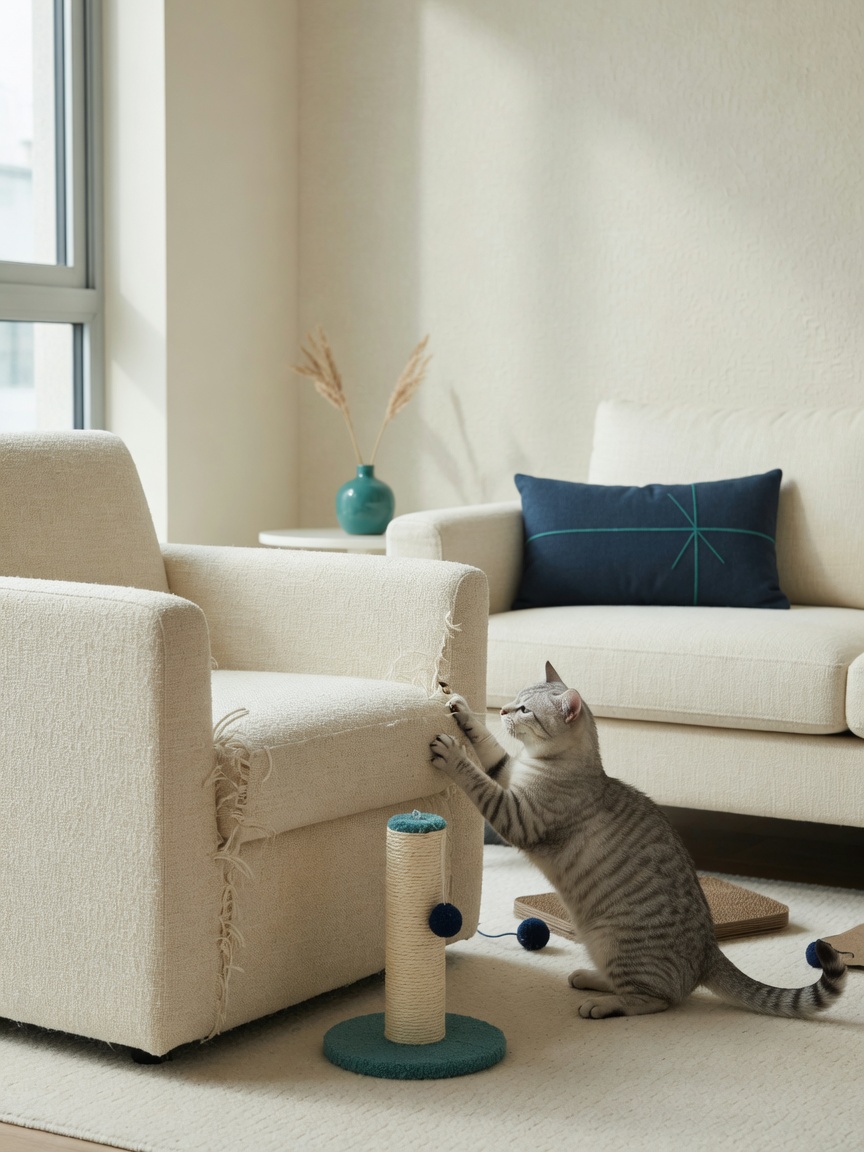
Why Do Cats Scratch Furniture
Disclosure: Honest Pet Care participates in affiliate programs. We may earn a commission if you buy through our links, at no extra cost to you.
If you live with a cat, you've likely returned home to find your couch or favorite chair covered in claw marks. Furniture scratching frustrates many owners, yet it's a completely natural behavior. According to recent industry surveys, over 65% of cat owners report ongoing issues with their pets damaging household items, making it one of the most common challenges in multi-pet homes.
Understanding the "why" behind this habit helps you address it compassionately rather than fighting your cat's instincts.
The Instinctual Reasons Cats Scratch
Scratching serves several essential purposes for cats. It helps them shed old claw layers, mark territory through scent glands in their paws, and stretch their muscles after rest. In the wild, these actions keep claws sharp for hunting and climbing. Indoor cats retain these drives even without outdoor access, so they turn to whatever surfaces feel satisfying under their paws.
This behavior isn't about spite or poor training. It's hardwired, which explains why punishment rarely works and often increases stress-related scratching.
Why Furniture Becomes a Prime Target
Cats prefer furniture because it meets their criteria perfectly: vertical or horizontal surfaces at the right height, a satisfying texture like fabric or wood, and prominent locations for marking territory. Sofas and chairs often sit in high-traffic areas where cats want to leave their scent. The backing on many pieces also provides good resistance, allowing cats to get a deep stretch.
New furniture or rearranged rooms can trigger increased scratching as your cat reclaims the space.
Protecting Your Furniture Effectively
Start by making scratched items less appealing. Cover trouble spots temporarily with plastic sheeting or double-sided tape, which cats dislike on their paws. Once your cat uses appropriate outlets, remove the deterrents and consider washable slipcovers for long-term protection.
Regular nail trims every two to three weeks reduce damage even if scratching continues. Use cat-safe nail clippers and reward calm behavior during the process to build positive associations.
Creating an Ideal Scratching Environment
Provide multiple scratching options that outperform your furniture. Place sturdy vertical posts near sleeping areas and horizontal boards in play zones. Cats often prefer sisal, cardboard, or natural wood over carpeted surfaces, so experiment with textures.
Position posts near the previously targeted furniture to redirect the behavior. Height matters too—many cats enjoy stretching upward, so choose posts at least 30 inches tall with a stable base.
Training and Enrichment Strategies
Redirect rather than punish. When you catch your cat scratching furniture, calmly move them to an approved post and reward with treats or play. Consistency over several weeks usually yields results.
Increase daily enrichment to reduce boredom-driven scratching. Puzzle feeders, interactive toys, and window perches keep cats mentally stimulated. Consider adopting a second cat if your pet seems lonely, but only if your household can handle the added responsibility.
Frequently Asked Questions
Does declawing stop furniture scratching?
Declawing removes the last bone of each toe and is considered inhumane by most veterinary organizations. It can lead to chronic pain and behavioral issues. Focus on redirection instead.
How long does it take to change scratching habits?
Most cats show improvement within two to four weeks when owners provide appealing alternatives and remain consistent with redirection.
Can certain cat breeds scratch more than others?
All cats scratch, though more active breeds like Bengals or Abyssinians may need extra outlets. Individual personality and environment play larger roles than breed alone.
Understanding your cat's needs turns a frustrating habit into an opportunity for better care. With the right outlets and a little patience, you can protect your home while supporting your cat's natural behaviors. Over time, this approach strengthens the bond you share and creates a more peaceful living space for everyone.
We may earn a small commission if you purchase through our links — at no extra cost to you.
Check prices on Amazon