Signs Your Cat Needs Dental Care
Disclosure: Honest Pet Care participates in affiliate programs. We may earn a commission if you buy through our links, at no extra cost to you.
Dental disease is one of the most common health issues in cats, yet it often goes unnoticed until it becomes painful. According to veterinary studies, more than 70 percent of cats over the age of three show signs of oral disease. Catching problems early protects your cat from chronic pain, tooth loss, and even systemic issues that can affect the heart and kidneys. This guide walks you through the clearest warning signs and what to do next.
Persistent Bad Breath
Unlike occasional “cat breath,” ongoing halitosis usually signals plaque, tartar, or infection. Bacteria produce volatile sulfur compounds that create a distinctly foul odor. If your cat’s breath smells metallic or like rotten food even after eating, schedule a dental exam. Daily tooth brushing with a pet-safe enzymatic toothpaste is the most effective at-home step to reduce odor and slow plaque buildup.
Changes in Eating Habits
Cats with sore mouths often shift how they eat. Watch for these patterns: - Chewing only on one side of the mouth - Dropping food or leaving kibble behind - Switching from dry food to softer textures - Gradual weight loss despite a normal appetite
If your cat suddenly prefers wet food or begins eating more slowly, dental pain is a frequent culprit. Offering small, soft meals can provide temporary relief while you arrange a veterinary visit.
Red, Swollen, or Bleeding Gums
Healthy feline gums are pink and smooth. Redness along the gum line, swelling, or easy bleeding during gentle touch points to gingivitis or periodontal disease. Lift your cat’s lips in good lighting once a week to check for these changes. Consistent brushing and dental diets or treats approved by the Veterinary Oral Health Council help reduce inflammation before it advances to tooth resorption or abscesses.
Excessive Drooling or Pawing at the Mouth
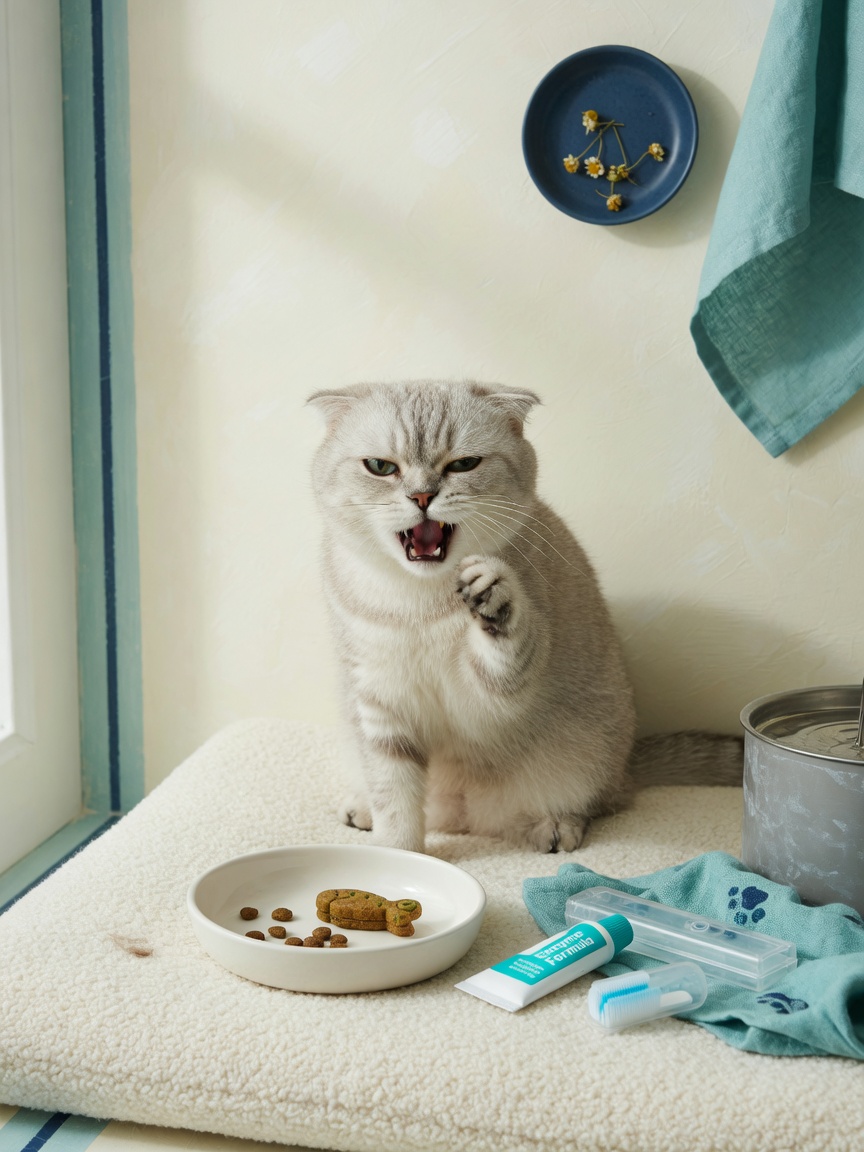
Sudden drooling, especially when not linked to excitement or certain foods, often indicates oral discomfort. Cats may also paw at their face, rub their cheeks on furniture, or shake their heads. These behaviors are attempts to relieve pressure from loose teeth or ulcers. Any combination of drooling and pawing warrants prompt professional evaluation rather than home remedies.
Behavioral and Grooming Changes
Dental pain can alter personality. A normally social cat may become withdrawn, irritable when the face is touched, or stop grooming altogether. Reduced grooming often leads to a dull coat or mats around the neck and shoulders. Conversely, some cats over-groom their paws or sides in response to referred pain. Tracking these subtle shifts helps you connect behavior to possible oral causes.
When Professional Care Is Needed
Most cats benefit from a professional dental cleaning under anesthesia once a year after age three, though frequency depends on breed and genetics. During the procedure, your veterinarian can take dental X-rays, scale below the gum line, and extract diseased teeth. Between visits, focus on prevention: brush several times a week, use vet-approved water additives, and provide dental chews designed for felines.
FAQ
How often should I brush my cat’s teeth?
Aim for daily brushing, but even three to four sessions per week significantly reduces tartar. Start slowly with a soft finger brush and cat toothpaste to build tolerance.
Can dental treats replace brushing?
Dental treats help mechanically scrape teeth and freshen breath, yet they work best alongside brushing and professional cleanings rather than as a standalone solution.
What happens if dental disease is left untreated?
Chronic infection can spread bacteria through the bloodstream, raising the risk of heart, liver, and kidney complications in addition to ongoing pain and tooth loss.
Regular observation at home combined with professional care keeps your cat comfortable and prevents small issues from becoming major problems. If you notice any of the signs above, contact your veterinarian to discuss an oral exam tailored to your cat’s needs.
We may earn a small commission if you purchase through our links — at no extra cost to you.
Check prices on Amazon